

Mood regulation
Targets the dorsolateral prefrontal cortex, a region involved in mood, emotional regulation, and the brain networks commonly addressed in depression care.
EXOMIND® ExoTMS™
FDA-cleared, non-invasive brain stimulation for Major Depressive Disorder—personalized in Phoenix with no medication, anesthesia, or downtime required.
Limited-time EXOMIND special
We are now running a special for EXOMIND treatment. Contact our team for current details and to learn whether EXOMIND may be right for you.
A different approach
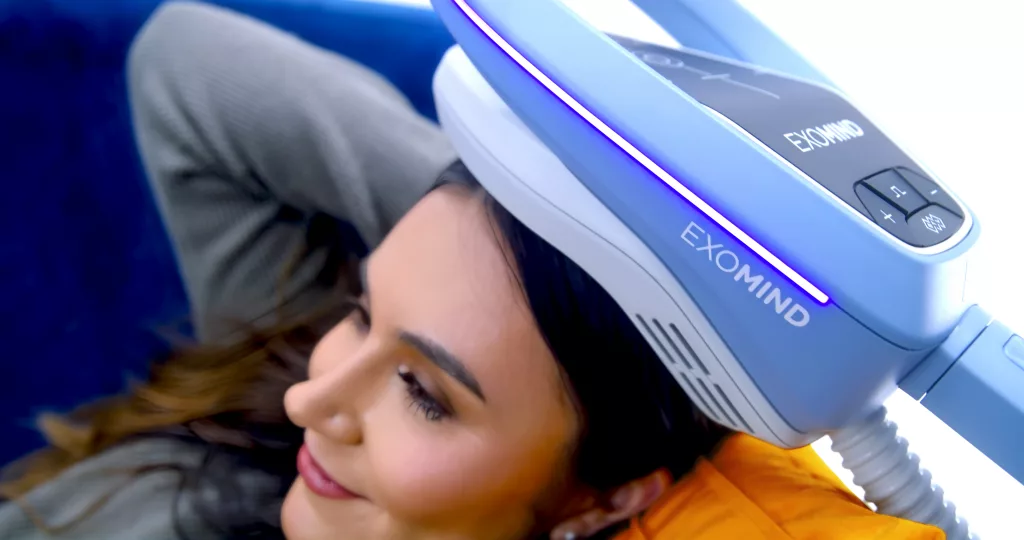
EXOMIND uses ExoTMS™ transcranial magnetic stimulation to deliver focused electromagnetic pulses to brain regions involved in mood and cognitive control. The treatment is performed while you are awake and comfortable.
What it does
The prefrontal cortex communicates with wider networks that influence mood, attention, motivation, and behavior. EXOMIND is designed to activate these pathways in a precise, repeatable way.
Targets the dorsolateral prefrontal cortex, a region involved in mood, emotional regulation, and the brain networks commonly addressed in depression care.
Stimulates neural pathways associated with attention, planning, decision-making, and the ability to stay engaged with everyday tasks.
Supports circuits involved in initiative and reward processing—areas that can feel disrupted during depression, stress, or prolonged burnout.
Repeated, precisely delivered magnetic pulses are designed to encourage adaptive activity and strengthen communication within targeted brain networks.
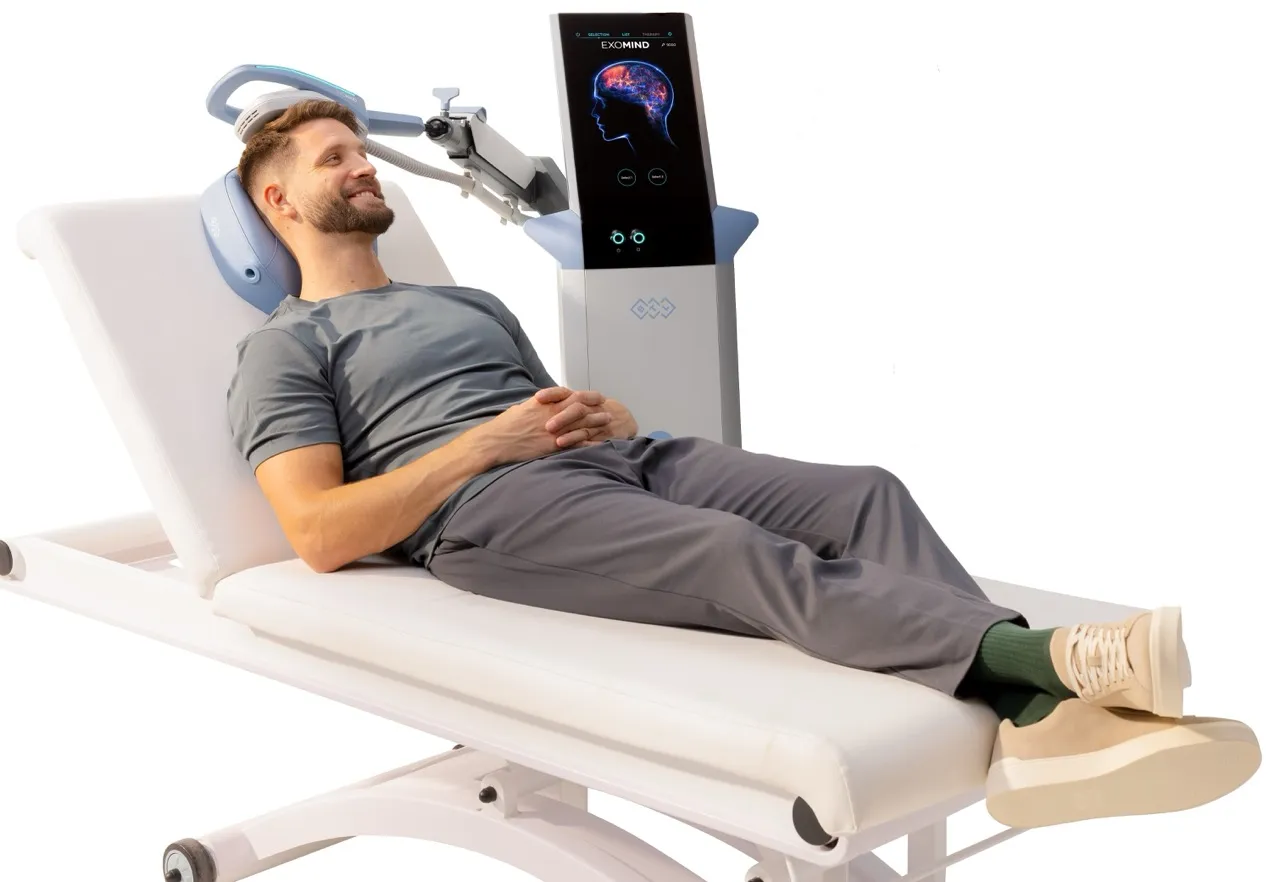
Awake, monitored, and able to resume your day after treatment.
The science
The applicator creates brief magnetic pulses that reach the targeted cortical area without surgery or implanted devices.
These pulses produce small electrical changes in nerve cells, influencing activity in the selected brain network.
Across a prescribed series, repeated stimulation is intended to help normalize network activity and support neuroplasticity—the brain’s ability to adapt.
Treatment goals
Your consultation determines whether EXOMIND is appropriate and which goals belong in your plan. Evidence, indications, and expected outcomes differ by use.
FDA-cleared indication
EXOMIND is FDA-cleared for Major Depressive Disorder. Treatment may be considered for adults experiencing persistent low mood, loss of interest, low energy, impaired concentration, or inadequate response to prior care, subject to clinical evaluation.
Learn about depression care →Personalized wellness goals
Some patients ask about focus, mental fatigue, stress resilience, motivation, emotional regulation, food cravings, or habit support. These goals are not the same as the FDA-cleared MDD indication and do not guarantee a specific result. We discuss the available evidence and suitability openly before treatment.
Your appointment
Every EXOMIND plan begins with a clinical conversation—not a one-size-fits-all protocol.
We review your symptoms, treatment history, medications, safety considerations, and the outcomes you hope to achieve.
Your clinician identifies the treatment position and establishes an intensity tailored to your individual response.
You remain awake in a reclining chair while the applicator delivers controlled magnetic pulses. A tapping sensation is expected.
Your care team tracks symptoms and functional changes over the series, then adjusts the plan when clinically appropriate.
The experience
EXOMIND does not require the preparation or recovery associated with sedating treatments.
A typical treatment can be scheduled within a normal workday.
You remain conscious and can communicate with the care team throughout.
There are no needles, sedatives, or implanted devices involved in treatment.
Most patients can drive themselves and return to usual activities immediately.
Your treatment series
TMS benefits develop through repeated stimulation, so EXOMIND is generally delivered as a series rather than a single appointment. The number of visits and spacing depend on the indication, symptom severity, prior treatment, response, and the clinician’s recommendation.
During the series, we may use symptom measures and your day-to-day experience—such as mood, energy, concentration, sleep, and function—to understand progress. Maintenance sessions may be discussed when clinically appropriate.
A free consultation gives us the full picture. In general, EXOMIND® may be a good fit if you identify with any of the following:
Your medical history, safety factors, and personalized stimulation plan are reviewed by our clinical team.
Treatment position and intensity are established for you, with comfort and response checked throughout each session.
Remain awake in a comfortable treatment chair with a care team available throughout your visit.
Wash and dry your hair before the appointment; avoid heavy styling products around the treatment area.
Wear comfortable clothing and remove earrings, hair accessories, or removable metal near the head.
Bring a current list of medications, supplements, diagnoses, and any history of seizures or head injury.
Tell us about implanted metal or electronic devices before treatment begins.
Eat normally and stay hydrated unless your clinician gives you different instructions.
Plan to return to normal activities afterward; EXOMIND does not routinely require a driver or recovery period.
Most patients describe treatment as comfortable, with a light tapping sensation on the scalp during the session.
A typical appointment takes about 25–30 minutes. Your first visit may take longer so we can complete your consultation, review safety considerations, and personalize the treatment settings.
No anesthesia or sedation is used. Most patients can drive themselves and return to their normal routine immediately after treatment.
Yes. EXOMIND is FDA-cleared in the United States for the treatment of Major Depressive Disorder (MDD). Broader wellness goals are discussed separately during your clinical consultation.
The number and frequency of sessions depend on your symptoms, goals, medical history, and response. Your clinician will recommend an individualized treatment series after your evaluation.
Not necessarily. Do not change any medication without guidance from your prescribing clinician. EXOMIND may be considered alongside an existing care plan when clinically appropriate.
Response varies. Some people notice changes during a treatment series, while others improve more gradually. No individual result can be guaranteed.
EXOMIND® is one of several pathways we offer. Compare each to find the right fit:
Our Phoenix clinic welcomes patients from every corner of Maricopa and Pinal counties. Pick your city below to learn about directions, drive times, neighborhoods we serve, and how local patients access exomind® with us.
Speak with our team about whether ketamine therapy is right for you. Most patients are seen within days.